
The Golden Age Death Rattle: 2008-2016
Street art died sometime between Banksy’s hotel opening in Bethlehem and Supreme’s IPO filing. Not literally, of course. The walls still get painted, the wheat paste still goes up at 3am, and teenagers still tag bathroom stalls with Sharpies. But the revolutionary potential that made street art a genuine threat to established power structures? That got buried under a mountain of gallery exhibitions and brand collaborations sometime around 2016.
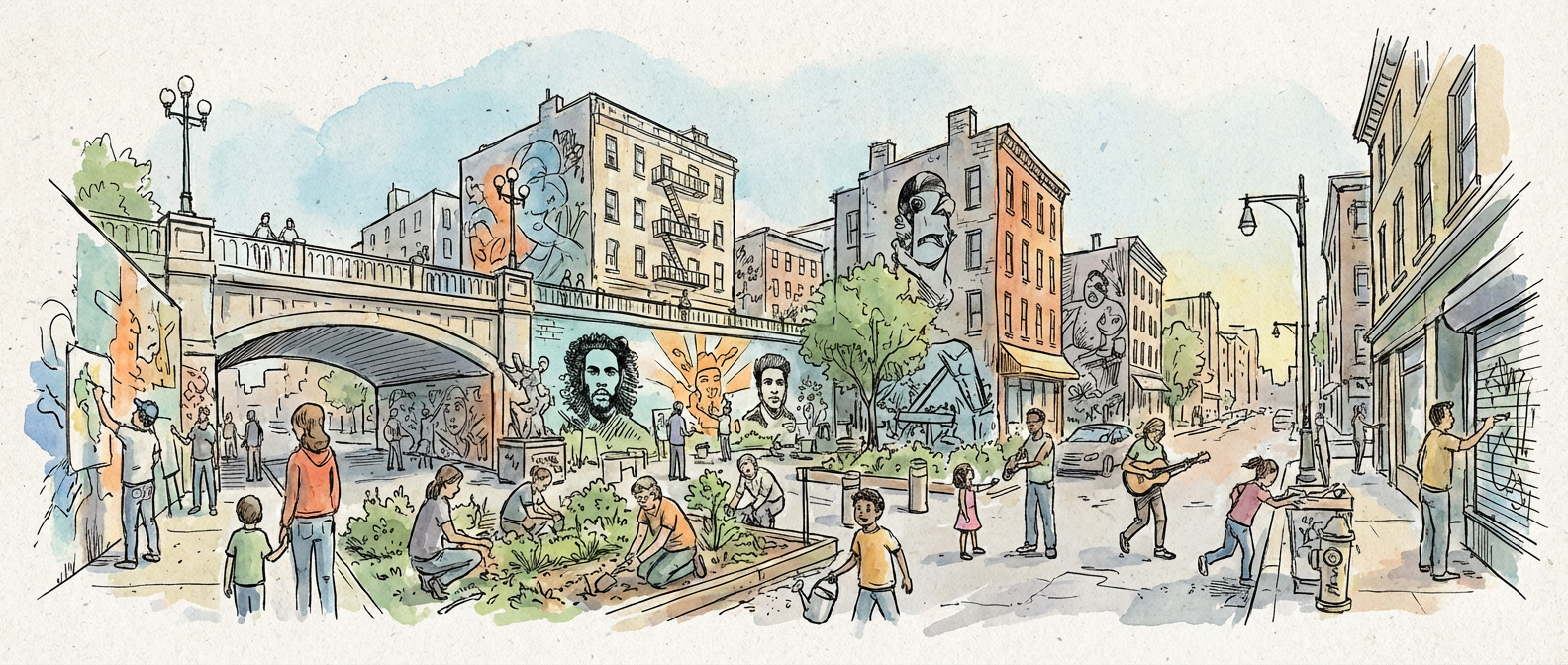
The timing wasn’t coincidental. The 2008 financial crisis created a perfect storm for street art’s mainstream breakthrough. Foreclosed properties sat empty, creating temporary canvases in gentrifying neighborhoods. Young people, financially squeezed and politically disillusioned, turned to public space as their only affordable medium for expression. Cash-strapped cities began embracing “creative placemaking” as economic development strategy, essentially paying artists to make declining areas more palatable for eventual displacement.
By 2012, you could trace the infection spreading. Shepard Fairey’s Obama poster had already demonstrated street art’s commercial viability, but the real turning point came when luxury brands started hiring bombers directly. Louis Vuitton commissioned graffiti artists for store windows. Nike built entire campaigns around “authentic” street culture. The aesthetic rebellion that once challenged private property became private property itself.

The Commodification Playbook: How Capital Always Wins
The corporate capture of street art followed capitalism’s standard operating procedure for neutralizing dissent: embrace, sanitize, monetize, control. First came the gallery legitimization. Institutions like the Museum of Contemporary Art began mounting major street art exhibitions, stripping the work from its original context and presenting it as fine art. Suddenly, pieces that were meant to be temporary interventions in public discourse became permanent fixtures in private collections.
The gentrification feedback loop accelerated everything. Property developers realized that commissioned murals could transform “sketchy” neighborhoods into “artistic communities” practically overnight, raising rents and displacing the same communities that produced the culture being commodified. Cities like Miami and Los Angeles weaponized street art through mural programs that simultaneously celebrated creativity and erased the political edge that made it threatening in the first place.
Social media provided the final nail in the coffin. Instagram’s algorithm rewarded the most photogenic pieces, pushing artists to create content for digital consumption rather than genuine community engagement. The platform’s emphasis on individual branding transformed collective rebellion into personal brand building, complete with sponsored posts and influencer marketing deals.
The Sanitization Machine: From Revolution to Decoration
Today’s “street art” bears little resemblance to its subversive origins. Walk through any recently gentrified neighborhood and you’ll find walls covered in corporate-approved murals that say nothing, challenge no one, and exist primarily to provide Instagram backgrounds for brunch photos. These pieces often carry the visual language of rebellion while completely abandoning its political content.
The transformation became complete when cities started hiring “street artists” to create permanent installations that actively discourage actual graffiti. These sanitized spaces function as urban theater, performing authenticity while eliminating the possibility of genuine unpredictability or dissent. The result is public art that promotes private interests, decorating spaces in ways that increase property values rather than questioning power structures.
The legal framework around street art has evolved to protect established artists while criminalizing newcomers. Celebrity muralists enjoy city permits and police protection for their work, while unknown writers still face arrest for the same activities. This two-tiered system has essentially professionalized what was once an inherently democratic medium, creating gatekeepers where none existed before.
Underground Resurrection: Where Real Innovation Happens Now
But here’s where it gets interesting. While mainstream street art calcified into corporate decoration, genuine innovation migrated to new territories. The most vital interventions happening right now aren’t on gallery walls or Instagram feeds. They’re in abandoned subway tunnels, on construction barriers, and in digital spaces where surveillance capitalism hasn’t yet figured out how to monetize dissent.
LED throwies have evolved into sophisticated projection bombing campaigns that turn entire buildings into canvases for political messaging. Guerrilla stencil crews use biodegradable materials that disappear before authorities can respond. QR code installations link physical spaces to encrypted digital networks, creating hybrid experiences that exist simultaneously in meatspace and cyberspace.
The most exciting work sidesteps the art world entirely, focusing on direct action and community organizing rather than aesthetic production. These practitioners understand that real public space reclamation isn’t about making pretty pictures on walls, it’s about challenging who gets to control the narrative in shared spaces.
What Comes After the Apocalypse
The future of public space intervention won’t look like street art as we’ve traditionally understood it. Climate change, economic inequality, and authoritarian surveillance have created new urgencies that demand new tactics. The artists worth watching are those developing practices that can’t be easily commodified, criminalized, or co-opted by existing power structures.
Temporary interventions are becoming more sophisticated, using materials and techniques that ensure ephemerality while maximizing impact. Collective actions are replacing individual expressions, making it harder for institutions to identify and neutralize key players. Digital integration allows for coordinated campaigns that span physical and virtual spaces, creating networks of resistance that are resilient to traditional forms of suppression.
The death of street art as commercial spectacle might actually be the best thing that could have happened to public space reclamation. With the tourists and trust fund kids chasing other trends, the spaces are clearing for practitioners who understand that the medium was never about making art. It was always about making trouble.
What underground movements are you tracking right now? Hit me up if you’re seeing innovations that haven’t been documented yet. The revolution might be over, but the resistance is just getting started.