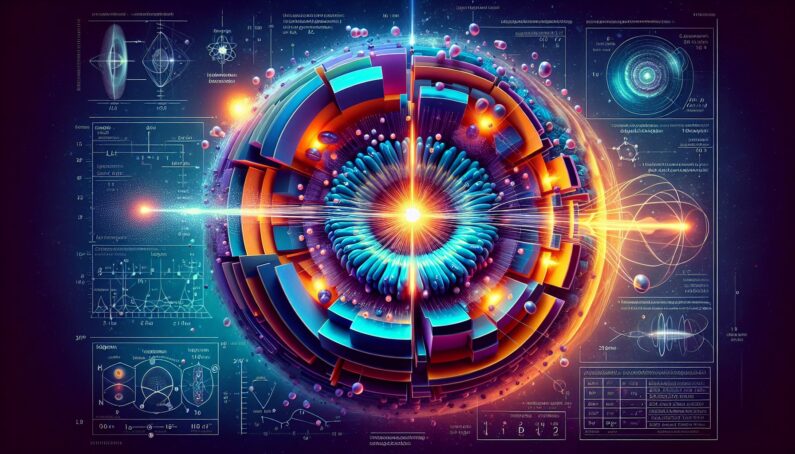
Hey tech enthusiasts! Today I want to talk about something that’s been brewing in the scientific world for years—nuclear fusion. Yeah, it’s basically the sun in a bottle. As someone who’s always been fascinated by the promises of clean, almost limitless energy, this feels like a sci-fi dream slowly trickling into reality. So, grab your virtual hard hats because we’re talking about one of the most potentially revolutionary energy sources of the future.
The Holy Grail of Energy
Let’s start with the basics. What the heck is nuclear fusion? Simply put, it’s the process that powers the sun and other stars. It involves smashing together light atomic nuclei—usually isotopes of hydrogen—to form heavier elements. In the process, you release a ton of energy. Unlike nuclear fission, which most of our current nuclear power relies on, fusion doesn’t produce long-lived radioactive waste. It’s like the Everlasting Gobstopper of power generation: long-lasting and infinitely fascinating.
The sheer potential of fusion has earned it the title “holy grail” of energy. Imagine a world where electricity generation is so clean and efficient that “energy crisis” becomes a term relegated to history. That’s the utopia many scientists and tech entrepreneurs are dreaming about.
The Road to Fusion: A Bumpy Ride
The journey to achieving nuclear fusion on Earth has been anything but smooth. Consider ITER, the International Thermonuclear Experimental Reactor—a multinational project aimed at making fusion a viable energy source. It’s been more costly and complicated than organizing a Kanye West concert on Mars. While fusion has been achieved in labs, the net energy gain where output surpasses input has remained elusive. In other words, we’re close, but no cigar.
Why Now? The Momentum is Building
Now you might be asking, “Why all the buzz about fusion now?” That’s a great question! Recent breakthroughs in technology and materials science, along with increasing climate concerns, are driving renewed interest and investment. The arrival of high-temperature superconductors is a game-changer, allowing us to create stronger magnetic fields to contain the plasma (the stuff stars are made of) that’s hot enough to give the sun a run for its money.
Plus, there are new kids on the block. I’m talking about tech startups like TAE Technologies and Commonwealth Fusion Systems. These companies are backed by Silicon Valley titans and have set their sights on achieving commercial fusion energy well within the next decade. We might just be looking at the next Tesla or SpaceX.
The Challenges Ahead
Sure, I’m excited, but it’s essential to keep our feet on the ground. Fusion is no small feat. The engineering challenges are enormous—containing something as hot as the sun is, unsurprisingly, difficult. Plus, there’s the financial cost, which is nothing to sneeze at. One metaphorical slip, and the entire lab goes up like your laundry when you forget to clean out the lint trap.
Not to mention regulatory approval, which can resemble an endless game of whack-a-mole. Governments and scientists have to ensure our enthusiasm doesn’t outpace our safety protocols; nobody wants a repeat of the Chernobyl or Fukushima disasters, for sure.
The Future: A Speculative Look
Okay, let’s put on our futurist hats for a moment. Imagine a world where every city, every electric car, and every grid-tied home runs on fusion energy. Carbon emissions? Practically zero. Geopolitical oil wars? Outdated. The economic impact could be staggering; imagine the boon to tech companies, the dollars saved in healthcare from reduced pollution, and the redistribution of economic power from oil-rich nations.
Of course, this is speculative territory. We’re not quite there yet, but it’s a tantalizing vision that’s increasingly feasible. And while fusion may not single-handedly stave off climate change or eliminate poverty, it’s a promising piece of a larger puzzle that includes solar, wind, and other renewable resources.
Where Do We Go From Here?
As we inch closer to making fusion energy a reality, it’s hard not to feel a rush of optimism. We’re navigating uncharted waters in energy science, and while the journey is full of challenges, the implications could be massive. Imagine a world where power struggles become power triumphs, where our reliance on fossil fuels dwindles, and where sustainable energy becomes universally accessible.
It’s a thrilling time to be a part of the tech world, to witness this pursuit of starlight energy on Earth. If we crack this cosmic code, the rewards will be out of this world—literally. Until that day, let’s keep our wits about us, our imaginations running wild, and our eyes firmly on the stars. Because who knows? The next post could be about how we’ve finally done it. Stay tuned, fellow tech dreamers!