The Numbers Don’t Lie, But They Do Tell a Strange Story
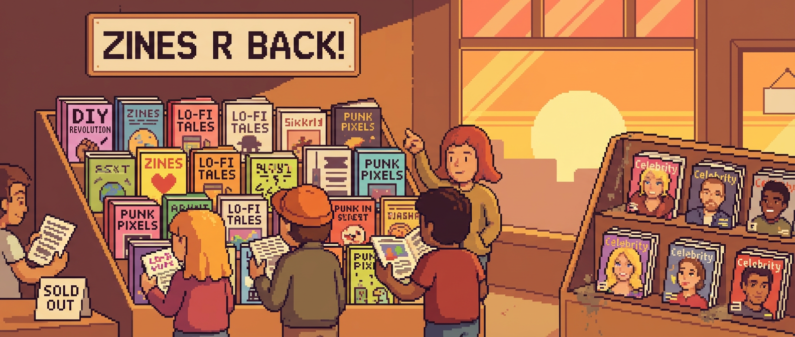
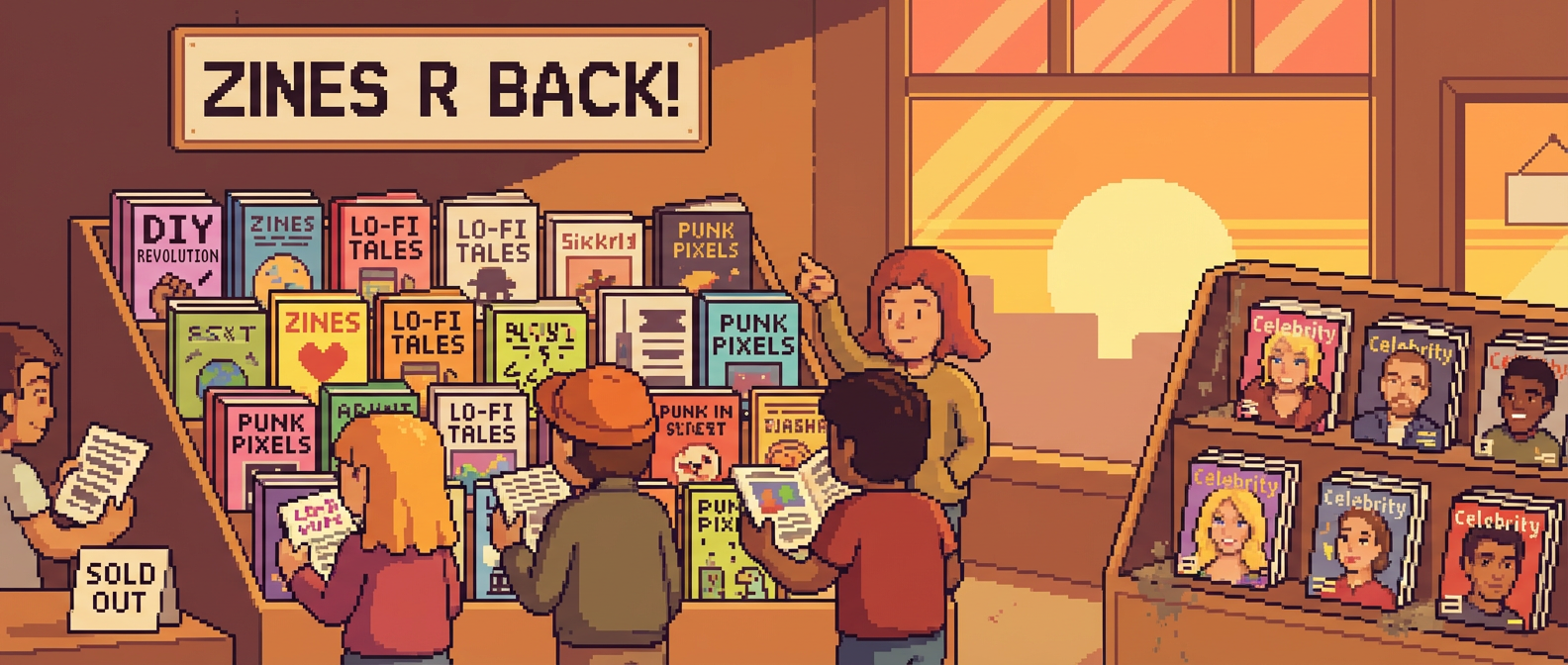
Something genuinely odd is happening in the physical retail spaces where culture still breathes. Independent bookshops across the UK reported a 58% jump in zine and self-published periodical sales between 2023 and 2025. That’s not a minor uptick. That’s the kind of growth curve that makes spreadsheet-obsessed retail consultants sit up straight, the kind that forces publishers to ask uncomfortable questions about whether they’ve been building the wrong product for the past two decades. At Gosh! Comics in London, the zine section launched just months ago and already captures 18% of monthly revenue. These aren’t vanity numbers. These are the financial signatures of a genuine cultural shift.
But here’s where it gets interesting, where the story stops being about market performance and starts being about what people actually want. The Printed Matter NY Art Book Fair 2025 drew 35,000 visitors and hosted over 400 zine exhibitors, marking its largest attendance in eighteen years. Four hundred. That’s not a niche interest group anymore. That’s a movement that’s crossed some invisible threshold from underground to undeniable. Meanwhile, risograph printer sales in the UK jumped 27% in 2025, and almost all of that growth came from micro-publishers and zine makers who decided that democratized print was worth the investment.
Why Young People Trust Zines More Than Everything Else
There’s a trust crisis in media that nobody really talks about anymore because we’ve accepted it as normal. We scroll past algorithm-fed content, we swipe past sponsored posts, we’ve learned to move through digital space with the emotional affect of someone scanning an airport gift shop. The noise has become so total that we’ve stopped expecting signal. And then, according to the Reuters Institute Digital News Report 2026, eighteen to twenty-four year olds proved they’re three times more likely to trust information in a physical zine from someone they actually know than in mainstream digital outlets. Three times. Not marginally more likely. Dramatically, structurally more likely.
Think about what that means. A twenty-two-year-old would rather receive fragmented, sometimes photocopied, occasionally grammatically messy information from a peer than accept the polished output of institutions with editorial boards and fact-checkers. That’s not a statement about the quality of zines. It’s a statement about the collapse of institutional credibility. When young people choose to trust community-sourced information over corporate-curated news feeds, they’re not celebrating amateurism. They’re voting with their consumption patterns to say that authenticity matters more than authority. The messenger has become the message.
The Real Loss Hiding Inside the Success Story
This is where I need to get a little dark, because the resurrection of zine culture is also a funeral notice for something else entirely. The rise of zines isn’t actually a victory for independent media so much as it’s a symptom of the collapse of everything that came before. When independent bookshops become the primary venue for experiencing zines, when art fairs become the primary distribution channel for self-published work, we’re not witnessing the triumph of DIY culture. We’re watching the atomization of public space. Culture fracturing into a thousand tiny communities, each curating their own information ecosystem, each trusting only what they can touch and know personally.
The bookshops selling these zines used to sell newspapers. They used to sell magazines with newsprint budgets, editorial staff, and institutional knowledge. Some of those publications were genuinely terrible. Some were good. But they existed in a commons, a shared informational landscape where you might encounter an idea you didn’t seek out, a perspective you didn’t choose to find. Zine culture doesn’t work that way. It’s intentional, curated, self-selected. You have to know where to look. You have to be part of the network. That’s beautiful in its way, but it’s also profoundly fragmenting. The future it represents is one where we no longer have shared cultural reference points, where every seventeen-year-old in London and every twenty-three-year-old in Brooklyn is reading entirely different material, drawn from entirely different communities, understanding the world through completely separate lenses.
What Happens When DIY Becomes the Only Option
The real tension in this moment is that zine makers and independent publishers aren’t celebrating their victory. Most of them would tell you, if you bought them a drink and asked directly, that they’re making zines because the traditional publishing infrastructure collapsed first. They didn’t choose this path because it was romantic or politically pure. They chose it because it was the only remaining path. When production technology becomes accessible, when distribution networks fragment, when trust in institutions evaporates, people make art and share information with whatever tools remain available. Risograph printers became popular because they’re affordable. Zines proliferated because they’re cheap to produce. Community networks became the distribution channel because centralized retail couldn’t survive.
This isn’t inherently bad. Some genuinely extraordinary work is happening in zine form right now. The specificity is remarkable. The creativity is undeniable. But we shouldn’t pretend this is purely positive. We should acknowledge that we’re watching the disaggregation of public culture into a thousand small private conversations. The bookshop that now dedicates eighteen percent of its revenue to zines is a bookshop that had to abandon something else to make room. That something else was usually the mechanism through which unknown artists reached large audiences, through which unexpected ideas found readers they weren’t looking for.
Living in the Fractured Now
So what do we do with this information? How do we move through a culture that’s simultaneously experiencing genuine grassroots flourishing and structural fragmentation? The first thing is to stop pretending this is a simple story about the triumph of independent media. It’s not. It’s a complicated story about what happens when institutional trust collapses, when production becomes democratized, when distribution networks fragment into a thousand specialized channels. Some of that is genuinely positive. Some of it represents real loss.
The second thing is to stay intentionally curious about the work being done in spaces that aren’t easy to find. Support the independent bookshops building zine sections. Visit the art fairs. Buy work from micro-publishers. But also understand what you’re supporting. You’re supporting a culture of curation and specificity, which is beautiful and necessary. You’re also participating in the fragmentation of shared public space, which is something worth naming. The zine renaissance isn’t a return to something. It’s a completely new configuration of how culture gets made and shared. Whether that’s something to celebrate or mourn probably depends on what you lost when the old system broke.