The Moment We Knew
There’s a specific window in a neighborhood’s life when everyone simultaneously realizes it’s happening. Vila Madalena hit that moment around 2022 or 2023, depending on who you ask and how closely you were paying attention to the underground. The converted warehouses were already galleries. The street art had already achieved that perfect balance between intentional and spontaneous. The bars served natural wine to people who actually cared about natural wine. It was Berlin, but warm, and you could still afford a coxinha.
That window is already closing. Not in the way normal neighborhoods evolve. This is different. This is the sound of a cultural moment collapsing under the weight of its own discovery.
The Mathematics of Displacement
Let’s talk about what actually happened. Between 2023 and 2025, rental prices in Vila Madalena climbed 41 percent according to Brazil’s SECOVI-SP housing index. That’s not gradual urban evolution. That’s aggressive revaluation. That’s the moment when a neighborhood stops being a place where artists live and work and becomes a place where investors live and speculators work.
The Beco do Batman, that essential alley where street muralists had established a legitimate hub for commissioned works, lost three of its anchor figures to relocation in 2025 alone. They moved to Pinheiros, then Lapa, following the same invisible map that displacement always traces. You can watch a cultural geography redistribute itself in real time if you know where to look. Most people don’t. By the time they notice, the movement is complete.
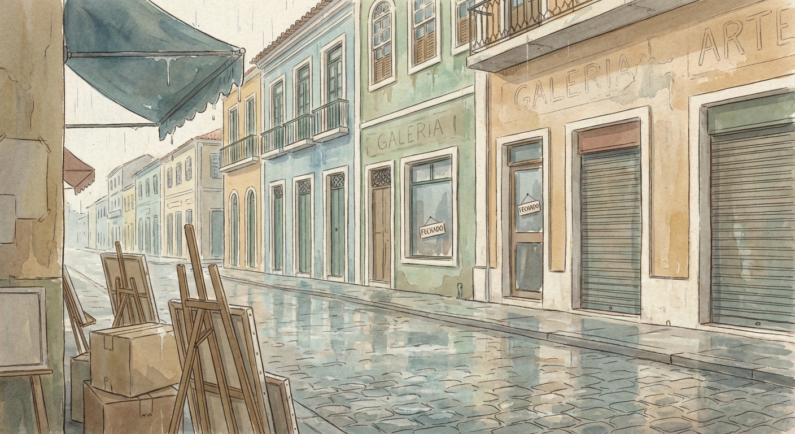
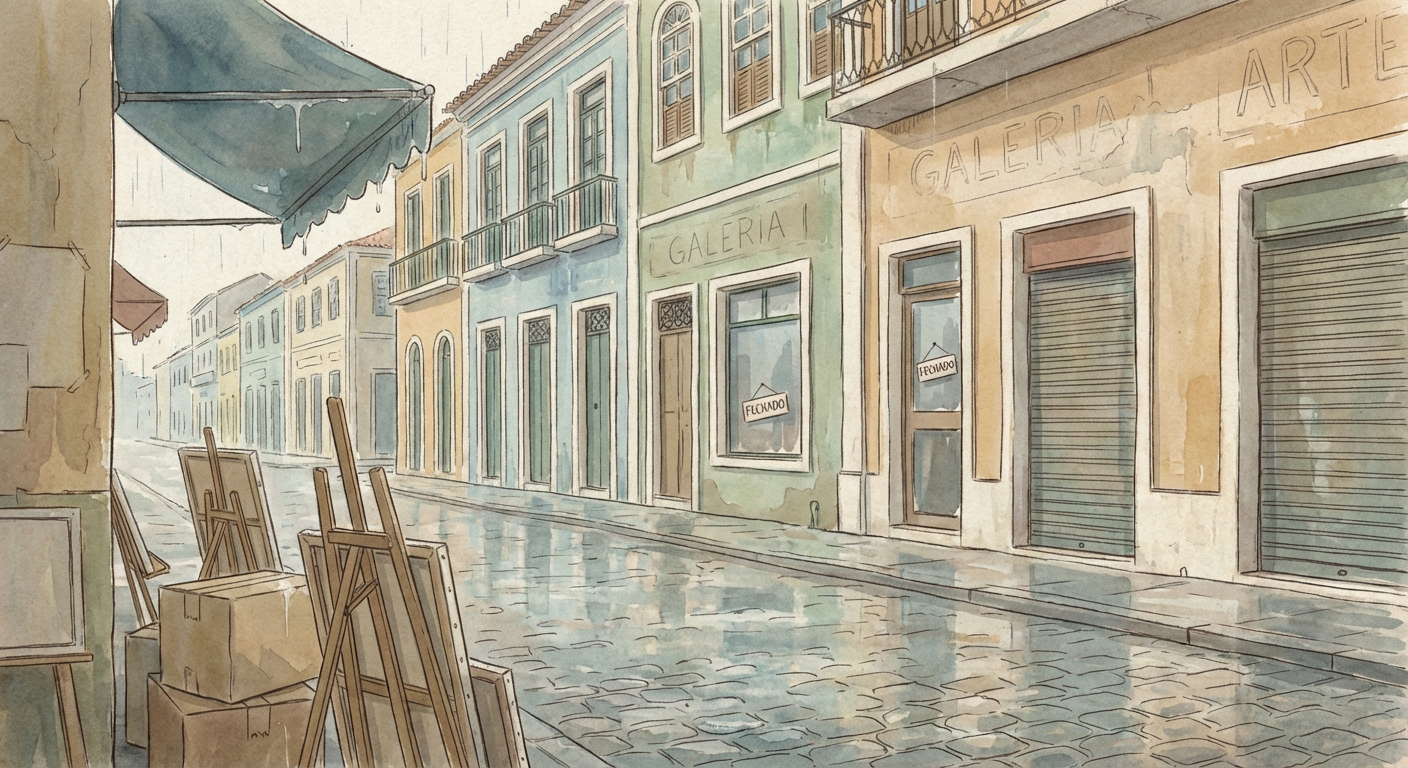
The data becomes almost poetic in its clarity. By the end of 2025, at least 14 independent galleries that had been operating in Vila Madalena in 2022 had either shuttered completely or relocated to less saturated neighborhoods. According to documentation from ArtNexus Latin American arts coverage, this wasn’t random attrition. This was systematic. The galleries didn’t leave because they failed. They left because success became unaffordable.
The Paradox of Investment
Here’s where it gets complicated, and where the contrarian in me has to acknowledge reality: São Paulo’s municipal government allocated a record R$180 million in cultural funding for 2025 through the Secretaria Municipal de Cultura. That’s genuinely significant. The city is saying it values its artists and creative infrastructure.
Except those resources rarely reach the ground level where they matter most. They fund institutions, festivals, and visibility projects. They create the infrastructure that attracts the real estate speculation that kills the conditions those resources were theoretically meant to support. The SP-Arte 2025 fair recap drew 35,000 visitors, a record attendance, and the fair explicitly platformed conversations about gentrification’s impact on grassroots visual culture. Everyone talked about the problem at the same event that’s partially responsible for creating it. There’s a kind of sophisticated obliviousness in that dynamic.
The funding creates legitimacy. Legitimacy creates attention. Attention creates investment. Investment creates displacement. The system works perfectly if your goal is to eliminate the conditions that made the initial cultural output worth legitimizing.
What Berlin Should Have Warned Us
The Berlin comparison isn’t accidental. It’s the same pattern, reproduced. A neighborhood develops authentic creative culture because it’s cheap and uncontrolled. The creative culture becomes a commodity. The commodity attracts capital. Capital eliminates the conditions that made the culture authentic in the first place. Then everyone acts shocked when the artists leave.
The difference is timing and awareness. We watched Berlin happen. We had the blueprint. We knew exactly how this story ends, which makes the fact that we’re still building the infrastructure for it in São Paulo feel less like inevitable urban evolution and more like willful negligence dressed up as progress.
Vila Madalena built something real. The muralists didn’t wake up one morning and think, “I’ll create an Instagram aesthetic for affluent Europeans.” The gallery owners didn’t calculate a gentrification timeline. The bartenders didn’t strategize about natural wine becoming fashionable. They just did the work. They made something matter. And now they’re leaving.
The Neighborhood’s Next Life
Vila Madalena will stay culturally relevant. It will host events and galleries and will keep showing up in travel guides. It will be beautiful and sophisticated and completely different from what made it beautiful in the first place. The infrastructure will remain. The authenticity will disperse. By the time most people discover Vila Madalena, the people who made it worth discovering will have already moved on to wherever is still affordable, still uncontrolled, still possible.
If you’ve been tracking São Paulo’s creative geography, you already know where they’re going. You’ve probably already been to the new spaces. You’re watching the pattern reproduce. You know that in three or four years, someone will write about those neighborhoods with the same reverent tone currently applied to Vila Madalena. And the cycle will continue.
What do you think happens next? Has this played out in your own city? The patterns are global, but the resistance strategies remain hyperlocal. If you’ve watched this particular story unfold somewhere else, or if you’re currently living through it, I want to know. The conversation can’t stay academic. It has to stay grounded in the actual experience of people trying to make culture in cities that have decided culture is primarily a real estate asset.